
Everything Peaks. Then It Dies.
You don’t hate trends. You hate being late.

A brand tweets a meme three weeks after it peaked.
A startup pitches “AI-powered” six months after every startup pitches “AI-powered.”
A LinkedIn thought leader posts the take you saw on Twitter in March.
Congratulations. It’s already over.
The internet doesn’t move fast. It cannibalizes novelty.
Every trend has a half-life. The higher it spikes, the faster it collapses.
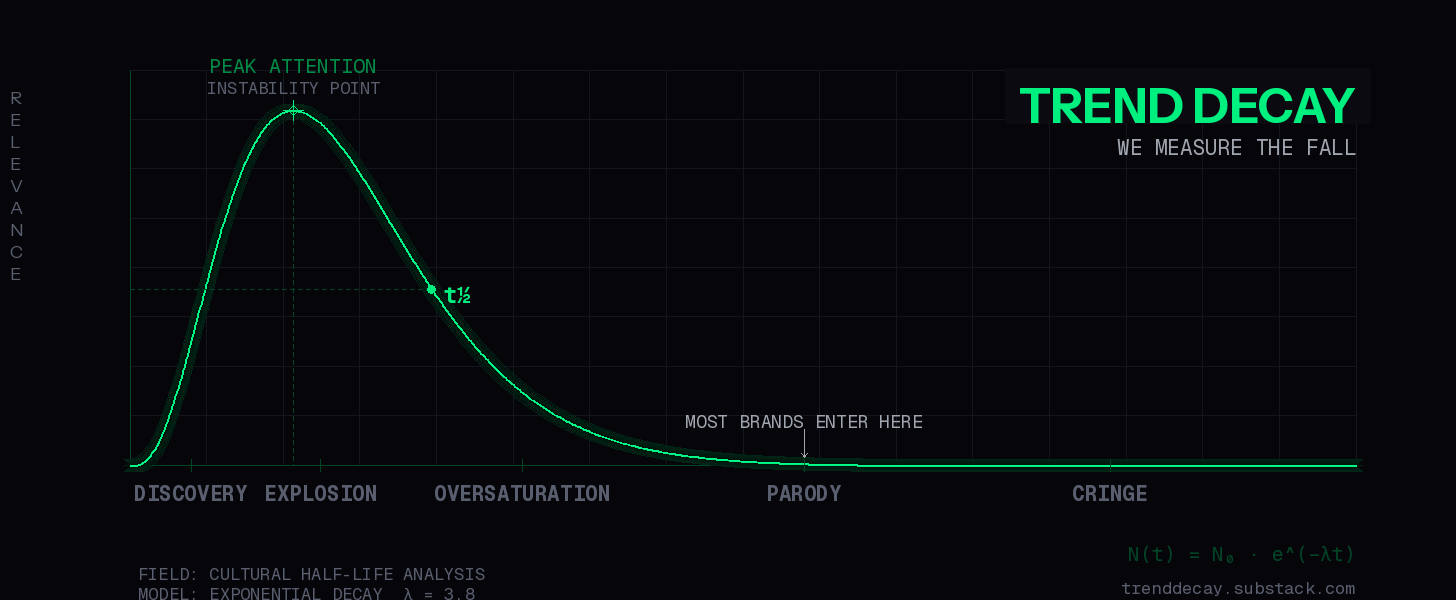
Discovery. Explosion. Oversaturation. Parody. Cringe.
By the time a trend hits parody, the decay has started. By the time it hits cringe, it’s culturally radioactive.
Most people enter at oversaturation. Most brands enter at parody. No one exits on time.
The algorithm rewards peaks. But peaks are unstable.
Attention isn’t scarce. Freshness is.
Trend Decay isn’t about chasing virality.
It’s about timing.
If you can’t tell when something is rising, you’re noise. If you can’t tell when something is falling, you’re late.
We measure the fall.
What to expect: Decay curves on the trends that matter. Cultural half-life analysis. Timing frameworks for creators, marketers, and anyone tired of showing up after the moment has passed. New posts weekly.
Next up:
The Five Signs a Trend Is About to Die* — brands showing up, explainer threads, the parody layer. Decay leaves signals. We’ll show you exactly what they look like.